
A safer, stronger Burbank together.

Simple. Transparent. Accountable.

How it works.

A straightforward look at how Burbank's Automated License Plate Reader (ALPR) system works — from a camera reading a plate to a secure, policy-driven record.

From the street to a secure record — here's how it works.

Four simple steps, designed for public safety, privacy, and accountability.

1

A camera reads a plate

Fixed cameras mounted in public rights of way capture license plate numbers as vehicles pass.

2

The system checks hot lists

The plate is automatically compared against approved law-enforcement hot lists.

3

Authorized staff review a match

If there's a hot-list match, an alert is sent to authorized personnel for review.

4

Data is stored under policy

Reads are stored for 30 days and then automatically deleted, per Policy 462.

A fixed ALPR reads every plate in view, not only suspect vehicles. Burbank's transparency portal shows roughly 99% of reads match no hot list. What limits that exposure is retention, access, and sharing rules.

What the system does

Supports public safety with real, practical uses.

Reads license plates in public rights of way

Captures plate numbers from vehicles on public roads.

Checks plates against approved hot lists

Compares against law enforcement databases of stolen vehicles, missing persons, and other alerts.

Generates investigative alerts on a match

Helps officers act on potential leads quickly.

Records visible vehicle attributes

Captures details like make, model, color, and other visible characteristics.

Supports investigations by authorized personnel

Provides a valuable tool for law enforcement within policy guidelines.

Sourced to Flock's capture documentation and BPD's FAQ. Sources
What it does not do

Clear limits help protect your privacy.

No facial recognition or biometrics

The system does not capture or analyze faces, biometrics, or other personal identifiers.

No audio recording

It does not record or store audio.

No public access to the data

Data is restricted to authorized law enforcement personnel.

Nationwide / interstate lookup is disabled

The system does not automatically search across state lines.

Not used for civil immigration enforcement

Data is not used for civil immigration enforcement (per Policy 462 and California law).

Stated by BPD and Flock. Immigration limits are set by Policy 462 and the Values Act. Sources

What data is captured

Each record includes key details about the vehicle.

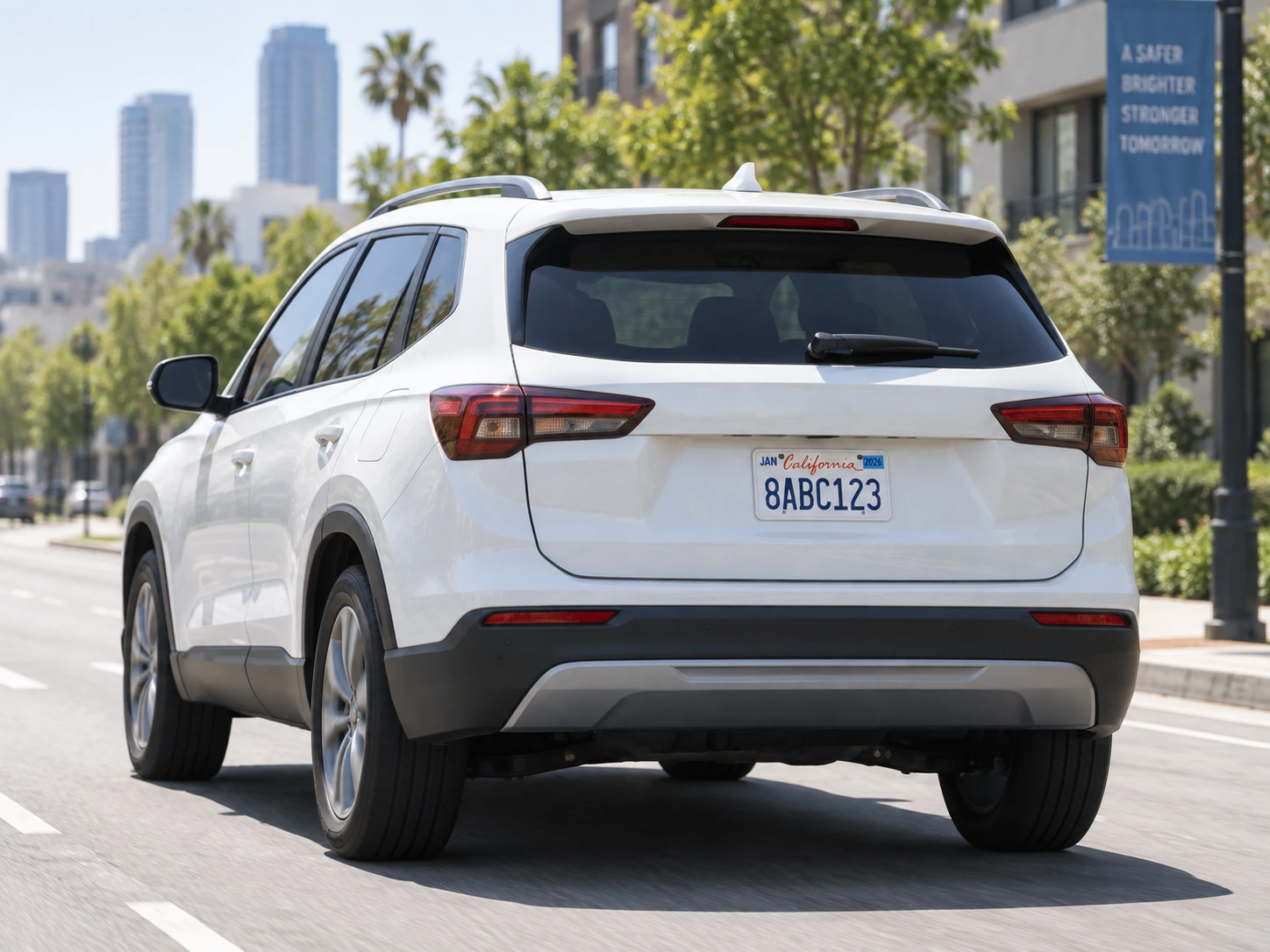
Sample ALPR record (illustrative)

Not a real record
Illustrative rear view of a white SUV with a dummy license plate reading 8ABC123.
Vehicle image (rear) · illustrative
License plate 8ABC123
Date & time Jan 16, 2026
10:24 AM
Location W Olive Ave &
N Victory Pl
Vehicle details (if available)
MakeToyota
ModelRAV4
ColorWhite
TypeSUV

Illustrative example. The system does not record audio or use facial recognition.

Built-in safeguards

Multiple layers of policy, oversight, and configuration keep the system accountable.

Learn more about safeguards

30-day retention

Data is automatically deleted after 30 days.

California-only sharing

Shared only with California law enforcement.

Access logs

Every search is logged and audited.

Policy controls

Clear rules govern how data can be used.

Audit review

Policy 462 requires an annual audit.

Next: review the rules around the system.

The Safeguards page separates retention, access, sharing, security, and audit controls so you can review each one without repeating the process explanation.